• About
  • Contact
  • Disclaimer
  • Oregon IP Resources

Oregon Intellectual Property Blog

Oregon Intellectual Property Blog

Category Archives: Copyright

Oregon Trail Owners Sue Zynga, Maker of Frontierville

20 Friday May 2011

Posted by Kenan Farrell in Copyright, Intellectual Property, Litigation, Oregon, Trademark

≈ Leave a comment

Interesting IP litigation story from Kotaku:

The May 30 launch of an “Oregon Trail” expansion pack in the popular Facebook game Frontierville has caught notice of the company holding the copyright to the edutainment classic, and it has sued to put a stop to the plans of Frontierville maker Zynga.

The lawsuit, filed by The Learning Company in federal court in Massachusetts, alleges that Zynga cut a trailer for its “Oregon Trail” missions (above) that highlights similarities between them and the The Oregon Trail notably “setting up a wagon, provisioning, hunting, fording rivers, and helping others.” For the record, the trailer refers not to dysentery but “the Rocky Mountain Scoots.”

[Yes, the lawsuit is going on in Massachusetts but I couldn’t avoid mentioning it here.]

Full Complaint:

View this document on Scribd

Check out Gamasutra for more details.

Oregon Senator Demands IP Treaty Details

21 Thursday Jan 2010

Posted by Kenan Farrell in Copyright, Federal Initiatives, Intellectual Property, Legislation, Oregon

≈ Leave a comment

Tags

Anti-Counterfeiting, Digital Copyright, Ron Wyden

That a U.S. senator must ask a federal agency to share information regarding a proposed and “classified” international anti-counterfeiting accord the government has already disclosed is alarming. Especially when the info has been given to Hollywood, the recording industry, software makers and even some digital-rights groups.

Sen. Ron Wyden (D-Oregon) is demanding that U.S. Trade Representative Ron Kirk confirm leaks surrounding the unfinished Anti-Counterfeiting Trade Agreement, being negotiated largely between the European Union and United States. Among other things, Wyden wants to know if the deal creates international guidelines that mean consumers lose internet access if they are believed to be digital copyright scofflaws.

The ACTA negotiating nations include Australia, Canada, European Union states, Japan, South Korea, Mexico, Morocco, New Zealand, Singapore, Switzerland and the United States. They are to meet Jan. 25 in Mexico City.

Click here for full story.

Source: Wired.com

Oregon claims copyright in the public record (again)

04 Wednesday Nov 2009

Posted by Kenan Farrell in Copyright, Legislation, Oregon

≈ Leave a comment

Tags

Attorney General, Boing, Copyright

You may recall last year that the state of Oregon tried to claim copyright in preventing others from republishing Oregon laws. Well, they’re at it again.  Now, Oregon’s Attorney General is claiming copyright on the Attorney General’s Public Record and Public Meeting Manual.

See Boing Boing for the full story (and video).

oregon

Oregon Blocking Access to Public Domain Law via Copyright Litigation

23 Wednesday Sep 2009

Posted by Kenan Farrell in Copyright, Litigation, Oregon

≈ Leave a comment

Tags

Copyright Litigation

While all federal documents in the US are under the public domain, state governments don’t always follow that rule, and the state of Oregon has a history of trying to lock up its documents. Last year, there was some attention generated when some people uploaded copies of certain Oregon laws. Yes, it seems positively ridiculous that the state might claim copyright over the laws people are expected to follow. The state claimed that it was just complaining about the fact that the laws were scanned from its own book, with its own notes and page numbers — and that it wouldn’t complain if people had just copied the law. But that’s a weak excuse, and the state backed down later.

However, Oregon is back in the news on a similar issue, as Slashdot points us to the news that a professor is challenging the state’s attorney general to sue him after he scanned and posted a state-produced guide to using public-records laws. You would think, again, that the state would want such a document spread as widely as possible, as it would better help Oregonians understand the law. But the state claims it needs to sell the book for $25 to cover production costs. That doesn’t seem like much of an excuse. The fact that the state needs to produce a guide to understand its own laws seems troubling enough. Then locking them down with a copyright claim just makes it that much worse.

Source: Techdirt

Copyright and Trademark Issues For Blogs

21 Monday Sep 2009

Posted by Kenan Farrell in Copyright, Intellectual Property, Oregon, Trademark

≈ Leave a comment

Tags

Copyright, Intellectual Property, Trademark

This post begins a series dealing specifically with the legal issues that bloggers should be thinking about. First up are intellectual property issues, helping you understand your rights to link to information or graphics from other sources, quote from articles and blogs, or otherwise use someone else’s copyrighted works. It will also discuss the appropriate use of trademarks in blogs (both your marks and those of others).

I. Overview of Intellectual Property

What is copyright?

Copyright gives a creative person control over the use of an original work of authorship. A copyright owner has the exclusive right to reproduce a work, prepare derivative works, distribute copies or perform a work publicly. In the world of bloggers, original works of authorship can include text, images, audio or video creations (and a whole host of other things).

What is trademark?

A trademark is a distinctive sign or indicator used to identify that the products or services with which the trademark appears originate from a unique source, and to distinguish its products or services from those of other entities.

So think:

Pepsi®, McDonalds®, Apple®

Or:

pepsi logo mcdonalds apple logo

When you either hear/read the word mark or see the logo mark, you immediately associate that trademark with a particular product or service. Obviously, these are examples of very strong trademarks.

II. Copyright

Copyright issues start to come into play when you publish material created by others on your blog or, conversely, when someone else republishes material that you posted on your blog or website.

Copyright law applies to the reposting of text, images, audio and video. If you’re posting somebody else’s original work, you’re likely violating one of the exclusive rights mentioned above. But as you, me and anyone else on the Internet knows, people are copy/pasting, hyperlinking and cross-referencing all over the world, all the time. Are they all liable for copyright infringement? Luckily, the Copyright Act has a built-in exception called “fair use” that allows you to use other people’s copyrighted works for certain, enumerated purposes. These include criticism, comment, news reporting, teaching, scholarship or research. So, for example, if you are commenting on or criticizing an item that someone else has posted, and use a quote from that source, that’s probably fair use.

The following factors are considered in a fair use analysis:

  1. the purpose and character of the use, including whether such use is of a commercial nature or is for nonprofit educational purposes;
  2. the nature of the copyrighted work;
  3. the amount and substantiality of the portion used in relation to the copyrighted work as a whole; and
  4. the effect of the use upon the potential market for or value of the copyrighted work.

Keep in mind that the law favors “transformative” use. In other words, if you’re reposting another person’s original work, it’s more likely to be fair use if you’re using that work in a different manner or for a different purpose than the original. While you may borrow directly from another source, adding your own commentary and content is better than strict copying. Likewise, it’s better to repost only a small portion of someone else’s work than the work in its entirety.

bloggerdilemma

If you feel that you’ve gone too far in your copying, you probably have. Consider whether you’re able to share the same information but in a different way (i.e. your own words). If you can’t, that’s strong evidence it’s a fair use. Don’t worry if you’re confused…this is a gray area in copyright law that isn’t totally clear to anyone at the moment. If you have specific questions about your use of someone else’s creative works or someone else is using your works, contact a copyright professional (who should be well-versed on legal developments and what typically constitutes fair use) to provide a more detailed analysis.

Barneyª: Sharing is Caring DVD Box ArtAlso, on a practical note, if you’re using someone else’s text or images and they contact you to ask you to remove them, you probably just want to go ahead and do it. After all, there are lots of different ways to express an idea and usually hundreds of equally wonderful pictures to adorn your blog. On the other side, if you find someone else using your text or images, take a deep breath before contacting them and remember what Barney says about sharing:

III. Trademark

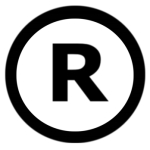
Let’s talk first about your own trademarks. Often you’ll have spent good time and money developing and protecting your trademarks. It would be a shame to lose your rights through improper use. Proper use enhances a mark’s ability to identify the origin of products or services, and minimizes the likelihood that a mark will become generic, or be abandoned unintentionally. Make sure you always use a proper trademark notice (™ for common law rights, ® if you’ve obtained registration) and remember to use your trademark as an adjective. Escalator was once a registered trademark but rights were lost when everyone started using the term as a noun to describe just any ol’ moving stairway. The mark no longer brought to mind its owner as the single origin of the product.

It’s probably just as common that you’ll post someone else’s trademark…I know this blog, as a news and information source, posts 3rd-party trademarks fairly regularly. This is typically permissible, because while trademark law prevents you from using someone else’s trademark to sell your competing products, it doesn’t stop you from using the trademark to refer to the trademark owner or its products. That is called “nominative fair use,” and is permitted if using the trademark is necessary to identify the products, services, or company you’re talking about, and you don’t use the mark to suggest the company endorses you. Again, bloggers get by on an exception to the rule…we are living in a gray legal realm. Consult a trademark professional if you’re concerned about your use of somebody else’s trademark.
trademarknotice

The next post in the series will discuss defamation. The post will explore your options when somebody has posted something false and damaging about you, including some common defenses. Until next time, sticks and stones, my friends!


Copyright Protection of Lecture Notes

19 Friday Jun 2009

Posted by Kenan Farrell in Copyright

≈ Leave a comment

‘My economics teacher is forcing us to give up all of our work for the semester. Every page of notes and paper must be turned over to her to be destroyed to prevent future students from copying it. My binder was in my backpack, and she went into my backpack to take it. Is that legal?’ Besides the issue with private property invasion, which was the trigger of that post, there is much more important question: Can a teacher ask a student not to retain knowledge? How does IP law relate to teaching and sharing knowledge? Whose property are those notes?” – from Slashdot

lecturerI came across this question and wanted to comment.  I won’t turn this into a full-blown legal analysis of copyright protection of class lecture notes, but there are some ideas I felt were important enough to mention.  Leaving aside the issue of the teacher going into the backpack, I’ll focus on the IP question because it just seems to keep popping up.  It’s a thorny issue that really shouldn’t be all that thorny.

First, keep in mind that facts and ideas are not protected by copyright.  Only the “expression” of facts or ideas can be protected.  When a student writes down notes from a lecture, he is primarily concerned with documenting the important facts and ideas of the lesson.  Any elements of the teacher’s expression that are copied into the notes are typically ancillary and of little real value to the student. Going further, it should be recognized that the facts and ideas that a teacher lectures on are primarily repackaged information that the teacher has derived from other sources.  A teacher seeking to enforce copyright ownership of this information is farcical at best.

I understand that classroom dynamics have been changing rapidly over the last few decades, with the introduction of photocopies, digital recorders, email, etc.  The “expression” of ideas, as opposed to the ideas themselves, can increasingly be captured verbatim.  Hence the growing and potentially misguided belief that copyright law needs to step in to protect a teacher’s expression of the facts. To the contrary, teachers need to get innovative and figure out how to embrace these technologies to further their one real goal…educating students.

Last year, a University of Florida professor brought a suit filled with interesting copyright claims against a commercial note-taking service.  To summarize, this service was paying students to take class notes and then sellingthose notes online as study aids.  I haven’t been able to locate an update to see how that case was resolved…it may have settled.  If someone has more information on the outcome, please leave a comment.  Regardless, the situation described in the question above does not involve a commercial note-taking service, just a tuition-paying, education-seeking economics student.  Therefore, many of the commercial elements that made the Florida professor’s copyright claims somewhat palatable do not exist here.

I find it remarkable that any teacher would ask a student to hand in all of their class resources at the end of a semester.  After all, there are actually students who go to university to gain knowledge they can use for the rest of their life…not just for the length of one semester and to be forgotten upon handing in the final exam.  Class materials, including quizzes, tests and lecture notes, are often important resources later in a student’s professional life.  Is the threat of future students copying the notes really so severe that it outweighs the potential value to the note-taking student?

Newer posts →

Categories

Create a free website or blog at WordPress.com.

Privacy & Cookies: This site uses cookies. By continuing to use this website, you agree to their use.
To find out more, including how to control cookies, see here: Cookie Policy
  • Subscribe Subscribed
    • Oregon Intellectual Property Blog
    • Join 147 other subscribers
    • Already have a WordPress.com account? Log in now.
    • Oregon Intellectual Property Blog
    • Subscribe Subscribed
    • Sign up
    • Log in
    • Report this content
    • View site in Reader
    • Manage subscriptions
    • Collapse this bar
 

Loading Comments...