• About
  • Contact
  • Disclaimer
  • Oregon IP Resources

Oregon Intellectual Property Blog

Oregon Intellectual Property Blog

Author Archives: Kenan Farrell

Defamation Issues for Blogs

25 Sunday Oct 2009

Posted by Kenan Farrell in Intellectual Property, Oregon

≈ Leave a comment

This post continues a series dealing with the legal issues that bloggers should be thinking about. This post covers defamation issues, and will explore your options when somebody has posted something false and damaging about you, including some common defenses.

slander

Consider the following scenarios: You’re out surfing the internet one day and come across a false and damaging statement that someone has written about you on their blog or website. Maybe you’re the one writing a scathing review about a new hit movie, including unsavory stories about its lead actress. Or maybe you wrote a glowing review but someone else leaves a libelous comment to your post. In all of these situations, you’ll want to be aware of your rights and obligations under defamation law. Don’t think so? Check out this recent case where a blogger was sued for defamation by a Chinese game developer for his critical review of their product.

What is defamation?

Generally speaking, defamation is the issuance of a false statement about another person, which causes that person to suffer harm. Slander involves spoken defamatory statements. Libel involves the making of defamatory statements in a printed or fixed medium, such as a newspaper, book or blog.

Defamation laws vary from state to state. Oregon has the following laws:

31.200 Liability of radio or television station personnel for defamation. (1) The owner, licensee or operator of a radio or television broadcasting station, and the agents or employees of the owner, licensee or operator, shall not be liable for any damages for any defamatory statement published or uttered in a radio or television broadcast, by one other than the owner, licensee or operator, or agent or employee thereof, unless it is alleged and proved by the complaining party that the owner, licensee, operator, agent or employee failed to exercise due care to prevent the publication or utterance of such statement in such broadcast.(2) In no event shall any owner, licensee or operator of a radio or television broadcasting station, or any agent or employee thereof, be liable for any damages for any defamatory statement published or uttered by one other than such owner, licensee, operator, agent or employee, in or as part of a radio or television broadcast by any candidate for public office, which broadcast cannot be censored by reason of federal statute or regulations of the Federal Communications Commission. [Formerly 30.150]

31.205 Damages recoverable for defamation by radio, television, motion pictures, newspaper or printed periodical. Except as provided in ORS 31.210, in an action for damages on account of a defamatory statement published or broadcast in a newspaper, magazine, other printed periodical, or by radio, television or motion pictures, the plaintiff may recover any general and special damages which, by competent evidence, the plaintiff can prove to have suffered as a direct and proximate result of the publication of the defamatory statement. [Formerly 30.155]

31.210 When general damages allowed. (1) In an action for damages on account of a defamatory statement published or broadcast in a newspaper, magazine, other printed periodical, or by radio, television or motion pictures, the plaintiff shall not recover general damages unless:

(a) A correction or retraction is demanded but not published as provided in ORS 31.215; or

(b) The plaintiff proves by a preponderance of the evidence that the defendant actually intended to defame the plaintiff.

(2) Where the plaintiff is entitled to recover general damages, the publication of a correction or retraction may be considered in mitigation of damages. [Formerly 30.160]

31.215 Publication of correction or retraction upon demand. (1) The demand for correction or retraction shall be in writing, signed by the defamed person or the attorney of the person and be delivered to the publisher of the defamatory statement, either personally, by registered mail or by certified mail with return receipt at the publisher’s place of business or residence within 20 days after the defamed person receives actual knowledge of the defamatory statement. The demand shall specify which statements are false and defamatory and request that they be corrected or retracted. The demand may also refer to the sources from which the true facts may be ascertained with accuracy.

(2) The publisher of the defamatory statement shall have not more than two weeks after receipt of the demand for correction or retraction in which to investigate the demand; and, after making such investigation, the publisher shall publish the correction or retraction in:

(a) The first issue thereafter published, in the case of newspapers, magazines or other printed periodicals.

(b) The first broadcast or telecast thereafter made, in the case of radio or television stations.

(c) The first public exhibition thereafter made, in the case of motion picture theaters.

(3) The correction or retraction shall consist of a statement by the publisher substantially to the effect that the defamatory statements previously made are not factually supported and that the publisher regrets the original publication thereof.

(4) The correction or retraction shall be published in substantially as conspicuous a manner as the defamatory statement. [Formerly 30.165]

31.220 Effect of publication of correction or retraction prior to demand. A correction or retraction published prior to notice of demand therefor shall have the same effect as a correction or retraction after demand, if the requirements of ORS 31.215 (2), (3) and (4) are substantially complied with. [Formerly 30.170]

31.225 Publisher’s defenses and privileges not affected. Nothing in ORS 31.205 to 31.220 shall be deemed to affect any defense or privilege which the publisher may possess by virtue of existing law.

Oregon’s retraction statutes provide protection from defamation lawsuits if the publisher retracts the allegedly defamatory statement according to the prescribed guidelines. The publisher has two weeks after receiving a demand for retraction to investigate the demand and determine whether to publish a correction or retraction. The retraction must appear in the first issue published, or first broadcast made, after the expiration of the two-week deadline. The content of the retraction should substantially state that the defamatory statements previously made are not factually supported, and that the publisher regrets their original publication. Finally, the correction or retraction must be published in substantially as conspicuous manner as was the defamatory statement. Oregon courts have held that the retraction statute does not violate the Oregon constitution and that it applies only to publishers and broadcasters, and not to individual defendants whose statements happened to be published or broadcast.

The statutes conspicuously leave out defamatory statements made on the internet.  Therefore, the statutes are to be amended in 2009 to stipulate that noneconomic damages may be awarded against the host or operator of a website for a defamatory statement published on the site only if a demand for correction or retraction is made and the host or operator does not publish a correction or retraction. Few courts have addressed retraction statutes with regard to online publications like blogs, but a Georgia court denied punitive damages based on the plaintiff’s failure to request a retraction for something posted on an Internet bulletin board.

What about defamatory statements that someone else makes in my comments?

The ability to comment on a blog is one of the key features of the blogosphere. Usually it promotes interactivity and civil discourse. Of course, sometimes a comment will include defamatory statements. Generally, anyone who repeats someone else’s statements is just as responsible for the defamatory content as the original speaker if they knew, or had reason to know, of the defamation. That seemingly would put a very large burden on bloggers to carefully monitor and censor comments. Fortunately, the Communications Decency Act, Section 230 provides a strong protection against liability for Internet “intermediaries” who provide or republish speech by others.

Section 230

(c) Protection for “Good Samaritan” blocking and screening of offensive material
(1) Treatment of publisher or speaker
No provider or user of an interactive computer service shall be treated as the publisher or speaker of any information provided by another information content provider.
(2) Civil liability
No provider or user of an interactive computer service shall be held liable on account of—
(A) any action voluntarily taken in good faith to restrict access to or availability of material that the provider or user considers to be obscene, lewd, lascivious, filthy, excessively violent, harassing, or otherwise objectionable, whether or not such material is constitutionally protected; or
(B) any action taken to enable or make available to information content providers or others the technical means to restrict access to material described in paragraph (1)

Oregon House Bill 2389 provides that a host or operator of a website is not liable for a defamatory statement published on the site by another person unless the host or operator failed to exercise due care to prevent publication of the defamatory statement.

Are there any defenses to defamation?

Truth

truthTruth is an absolute defense to a defamation claim. Defamation law does not prevent someone from publishing true information about you, no matter how damaging (although you might have a different cause of action).

Opinion

Opinions are not considered defamatory. But make sure you’re actually stating an opinion and not asserting a statement of fact. To determine whether a statement is an opinion, courts look at whether a reasonable reader or listener could understand the statement as asserting a statement of verifiable fact. (A verifiable fact is one capable of being proven true or false.) This is determined in light of the context of the statement. A few courts have said that statements made in the context of an Internet bulletin board or chat room are more likely to be opinions or hyperbole. For a blog, a court would likely start with the general tenor, setting, and format of the blog, as well as the context of the links through which the user accessed the particular entry. Next the court would look at the specific context and content of the blog entry, analyzing the extent of figurative or hyperbolic language used and the reasonable expectations of the blog’s audience.

Public vs. Private

A private figure claiming defamation – your neighbor, your mom, the cute girl who works at the bar down the street – only has to prove you acted negligently, which is to say that a “reasonable person” would not have published the defamatory statement. On the other hand, a public figure must show “actual malice” – that you published with either knowledge of falsity or in reckless disregard for the truth. This is a much more difficult standard for a plaintiff to meet. A public figure is someone who has actively sought, in a given matter of public interest, to influence the resolution of the matter. So a statement that is defamatory when made about your neighbor might not be defamatory if made about the lead actress in a new box office hit.

Practical Tip

Once you’ve concluded that someone has made a defamatory statement about you, what next? Consider consulting an attorney to discuss your options. But know that there are some very good reasons why actions for defamation may not be a good idea. First, a defamation lawsuit can create a greater audience for the false statements than they previously enjoyed. The media may cover the initial filing of a lawsuit and all the gory, illicity details of the complaint, but not follow through to the case’s ultimate resolution. The net effect could be that large numbers of people hear the false allegations but never learn how the litigation was resolved.

Second, damage awards in defamation lawsuits tend to be small. The fees expended in litigating even a successful defamation action can exceed the total recovery. There’s often a substantial price to pay to clear your name in the court of law.

If you’re interested in learning more about this topic, check the Electronic Frontier Foundation’s FAQ on Online Defamation Law.

Next up in the series will be anonymity. It will discuss what you should know about blogging anonymously and keeping your identity secret, including the duty of your internet service provider to protect your identifying information.

See related: Copyright and Trademark Issues for Blogs

Oregon Trademark Litigation Update – Adidas America v. Calmese

14 Wednesday Oct 2009

Posted by Kenan Farrell in Intellectual Property, Litigation, Oregon, Trademark

≈ Leave a comment

Oregon Trademark Litigation Update:

Adidas America v. Calmese
No. 08-CV-91-ST (October 7, 2009)
U.S. District Court, Oregon
Before: Brown

For Full Opinion:
2009 U.S. Dist. LEXIS 94690

TRADEMARK; LIKELIHOOD OF CONFUSION  (Defendant failed to show likelihood of confusion even though the court found Defendant had fanciful or arbitrary mark, similar business channels, and bad faith on the part of plaintiff.)

Opinion (Brown): Defendant Calmese registered a trademark in the phrase “prove-it!” Plaintiff Adidas America used the same phrase on a line of t-shirts. Plaintiff sued defendant for declaratory judgment of non-infringement. Plaintiff moved for summary judgment. The district court held three factors of the likelihood of confusion test weighed in favor of Defendant: Defendant’s mark was fanciful or arbitrary, both parties sold goods in the Phoenix, Arizona area, and therefore operated in similar business channels, and Plaintiff had actual or constructive knowledge of Defendant’s trademark, thus showing bad faith on the part of Plaintiff. However, Plaintiff’s goods were not related to Defendant’s goods, the marks used lacked similarity, and Defendant showed no evidence of actual confusion. The court held Defendant failed to show any likelihood of confusion. Plaintiff’s motion for summary judgment granted.

Source: Willamette Law Online

adidas_logo

Oregon Blocking Access to Public Domain Law via Copyright Litigation

23 Wednesday Sep 2009

Posted by Kenan Farrell in Copyright, Litigation, Oregon

≈ Leave a comment

Tags

Copyright Litigation

While all federal documents in the US are under the public domain, state governments don’t always follow that rule, and the state of Oregon has a history of trying to lock up its documents. Last year, there was some attention generated when some people uploaded copies of certain Oregon laws. Yes, it seems positively ridiculous that the state might claim copyright over the laws people are expected to follow. The state claimed that it was just complaining about the fact that the laws were scanned from its own book, with its own notes and page numbers — and that it wouldn’t complain if people had just copied the law. But that’s a weak excuse, and the state backed down later.

However, Oregon is back in the news on a similar issue, as Slashdot points us to the news that a professor is challenging the state’s attorney general to sue him after he scanned and posted a state-produced guide to using public-records laws. You would think, again, that the state would want such a document spread as widely as possible, as it would better help Oregonians understand the law. But the state claims it needs to sell the book for $25 to cover production costs. That doesn’t seem like much of an excuse. The fact that the state needs to produce a guide to understand its own laws seems troubling enough. Then locking them down with a copyright claim just makes it that much worse.

Source: Techdirt

Copyright and Trademark Issues For Blogs

21 Monday Sep 2009

Posted by Kenan Farrell in Copyright, Intellectual Property, Oregon, Trademark

≈ Leave a comment

Tags

Copyright, Intellectual Property, Trademark

This post begins a series dealing specifically with the legal issues that bloggers should be thinking about. First up are intellectual property issues, helping you understand your rights to link to information or graphics from other sources, quote from articles and blogs, or otherwise use someone else’s copyrighted works. It will also discuss the appropriate use of trademarks in blogs (both your marks and those of others).

I. Overview of Intellectual Property

What is copyright?

Copyright gives a creative person control over the use of an original work of authorship. A copyright owner has the exclusive right to reproduce a work, prepare derivative works, distribute copies or perform a work publicly. In the world of bloggers, original works of authorship can include text, images, audio or video creations (and a whole host of other things).

What is trademark?

A trademark is a distinctive sign or indicator used to identify that the products or services with which the trademark appears originate from a unique source, and to distinguish its products or services from those of other entities.

So think:

Pepsi®, McDonalds®, Apple®

Or:

pepsi logo mcdonalds apple logo

When you either hear/read the word mark or see the logo mark, you immediately associate that trademark with a particular product or service. Obviously, these are examples of very strong trademarks.

II. Copyright

Copyright issues start to come into play when you publish material created by others on your blog or, conversely, when someone else republishes material that you posted on your blog or website.

Copyright law applies to the reposting of text, images, audio and video. If you’re posting somebody else’s original work, you’re likely violating one of the exclusive rights mentioned above. But as you, me and anyone else on the Internet knows, people are copy/pasting, hyperlinking and cross-referencing all over the world, all the time. Are they all liable for copyright infringement? Luckily, the Copyright Act has a built-in exception called “fair use” that allows you to use other people’s copyrighted works for certain, enumerated purposes. These include criticism, comment, news reporting, teaching, scholarship or research. So, for example, if you are commenting on or criticizing an item that someone else has posted, and use a quote from that source, that’s probably fair use.

The following factors are considered in a fair use analysis:

  1. the purpose and character of the use, including whether such use is of a commercial nature or is for nonprofit educational purposes;
  2. the nature of the copyrighted work;
  3. the amount and substantiality of the portion used in relation to the copyrighted work as a whole; and
  4. the effect of the use upon the potential market for or value of the copyrighted work.

Keep in mind that the law favors “transformative” use. In other words, if you’re reposting another person’s original work, it’s more likely to be fair use if you’re using that work in a different manner or for a different purpose than the original. While you may borrow directly from another source, adding your own commentary and content is better than strict copying. Likewise, it’s better to repost only a small portion of someone else’s work than the work in its entirety.

bloggerdilemma

If you feel that you’ve gone too far in your copying, you probably have. Consider whether you’re able to share the same information but in a different way (i.e. your own words). If you can’t, that’s strong evidence it’s a fair use. Don’t worry if you’re confused…this is a gray area in copyright law that isn’t totally clear to anyone at the moment. If you have specific questions about your use of someone else’s creative works or someone else is using your works, contact a copyright professional (who should be well-versed on legal developments and what typically constitutes fair use) to provide a more detailed analysis.

Barneyª: Sharing is Caring DVD Box ArtAlso, on a practical note, if you’re using someone else’s text or images and they contact you to ask you to remove them, you probably just want to go ahead and do it. After all, there are lots of different ways to express an idea and usually hundreds of equally wonderful pictures to adorn your blog. On the other side, if you find someone else using your text or images, take a deep breath before contacting them and remember what Barney says about sharing:


III. Trademark

Let’s talk first about your own trademarks. Often you’ll have spent good time and money developing and protecting your trademarks. It would be a shame to lose your rights through improper use. Proper use enhances a mark’s ability to identify the origin of products or services, and minimizes the likelihood that a mark will become generic, or be abandoned unintentionally. Make sure you always use a proper trademark notice (™ for common law rights, ® if you’ve obtained registration) and remember to use your trademark as an adjective. Escalator was once a registered trademark but rights were lost when everyone started using the term as a noun to describe just any ol’ moving stairway. The mark no longer brought to mind its owner as the single origin of the product.

It’s probably just as common that you’ll post someone else’s trademark…I know this blog, as a news and information source, posts 3rd-party trademarks fairly regularly. This is typically permissible, because while trademark law prevents you from using someone else’s trademark to sell your competing products, it doesn’t stop you from using the trademark to refer to the trademark owner or its products. That is called “nominative fair use,” and is permitted if using the trademark is necessary to identify the products, services, or company you’re talking about, and you don’t use the mark to suggest the company endorses you. Again, bloggers get by on an exception to the rule…we are living in a gray legal realm. Consult a trademark professional if you’re concerned about your use of somebody else’s trademark.

trademarknotice

The next post in the series will discuss defamation. The post will explore your options when somebody has posted something false and damaging about you, including some common defenses. Until next time, sticks and stones, my friends!

Oregon State in Mustard Seed Patent Dispute

10 Thursday Sep 2009

Posted by Kenan Farrell in Intellectual Property, Litigation, Oregon, Patent

≈ Leave a comment

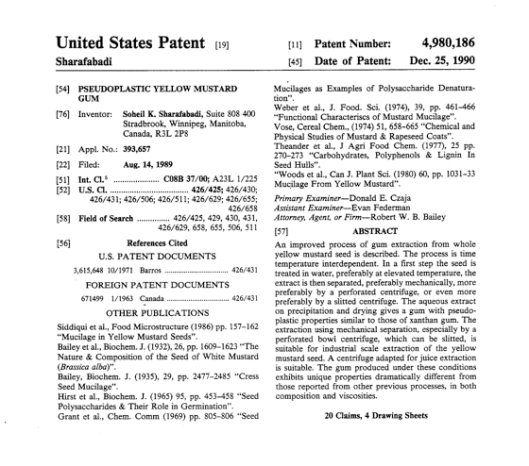
(AP) — BOISE, Idaho – Three Pacific Northwest universities face a federal lawsuit that accuses them of using, without permission, a Canadian inventor’s patented process to build a better yellow mustard seed.

Soheil Sharafabadi, who filed the lawsuit in U.S. District Court in Seattle, says the University of Idaho used his patent to produce new varieties of mustard seed with higher yields.

Washington State University and Oregon State University collaborated with the Idaho university, providing research stations and scientists, according to court documents.

The lawsuit, filed July 23, names all three schools and agricultural suppliers in Idaho, Washington, Montana and California that sell and distribute the mustard seeds Sharafabadi says were developed with his 1990 “Pseudoplastic Yellow Mustard Gum” patent (Patent No. 4,980,186).

Seed patent

Plaintiff: Soheil K Sharafabadi
Defendant: University of Idaho, Pacific Northwest Farmers Coop (Genesee), Pacific Northwest Farmers Coop (Colfax), Montana Specialty Mills LLC, McKay Seeds Company, LA Hearne Company, Oregon State University and Washington State University
Case Number: 2:2009cv01043
Filed: July 23, 2009
Court: Washington Western District Court
Office: Seattle Office [ Court Info ]
County: XX Outside US
Presiding Judge: Judge James L. Robart
Nature of Suit: Intellectual Property – Patent
Cause: 35:271 Patent Infringement
Jurisdiction: Federal Question
Jury Demanded By: Plaintiff

Full story here.

BSU Files Trademark Lawsuit Against Fred Meyer

02 Wednesday Sep 2009

Posted by Kenan Farrell in Litigation, Oregon, Trademark

≈ Leave a comment

Boise State University is suing Portland-based grocery chain Fred Meyer for trademark infringement on merchandise being sold in advance of this week’s football showdown against Oregon.

The lawsuit filed in U.S. District Court in Boise last Thursday accuses the grocer of selling blue and orange shirts at several stores close to the BSU campus and adjacent to officially sanctioned apparel.  The shirts include statements like “Duck Season” and “Buck the Ducks,” and feature pictures of a bronco kicking a duck.

University lawyers contend the shirts were not officially licensed through the school’s licensing agent and infringe on name and color scheme trademarks.

School officials have been working to resolve the matter, and the grocery chain has reportedly been cooperative.  Shirts are being removed from stores, so if you’ve already bought one, consider it a collectors’ item.

The No. 14 Broncos open the season Thursday night at home against No. 16 Oregon.

duck

Oregon Trademark Litigation Update – Relativity Rogue, LLC v. Oregon Brewing Company

25 Tuesday Aug 2009

Posted by Kenan Farrell in Litigation, Oregon, Trademark

≈ Leave a comment

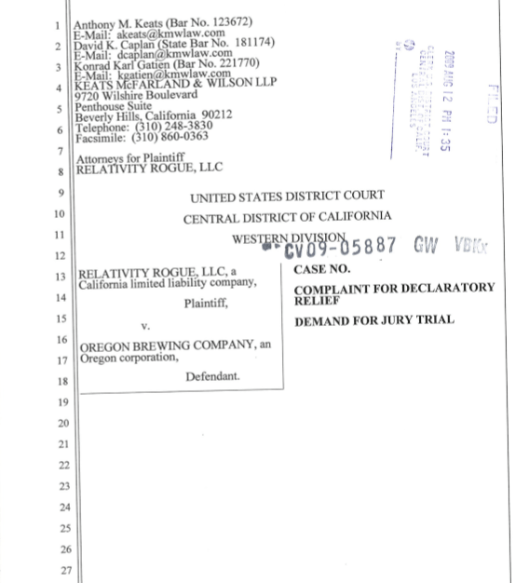
Case Number: 2:09-cv-05887-GW-VBK
File Date: Wednesday, August 12, 2009
Plaintiff: Relativity Rogue, LLC
Plaintiff Counsel: Anthony M. Keats, David K. Caplan, Konrad K. Gatien of Keats McFarland & Wilson LLP
Defendant: Oregon Brewing Company
Cause: 15:1051 Trademark Infringement
Court: California Central District Court
Judge: Judge George H. Wu
Referred To: Magistrate Judge Victor B. Kenton

roguestout

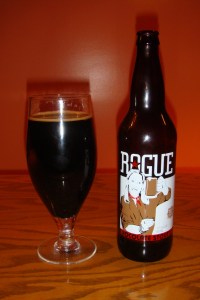
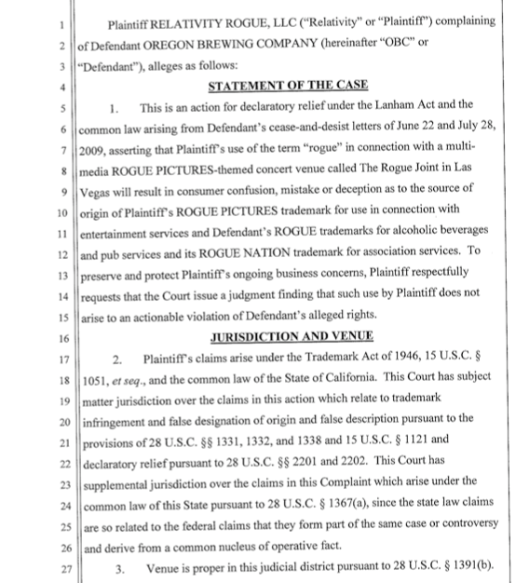
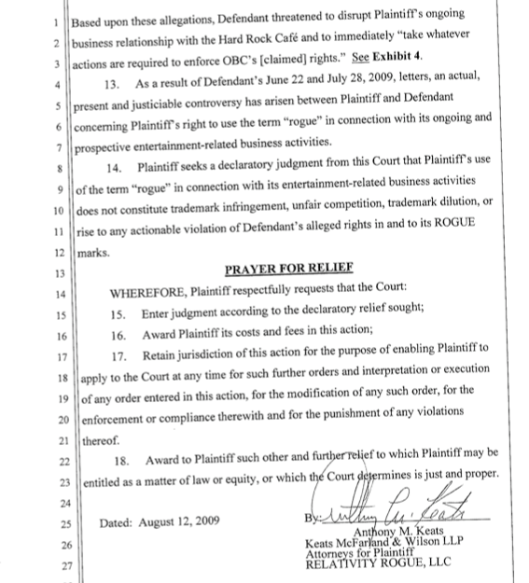
A California-based film production company named Relativity Rogue (“Relativity”) has filed an action for declaratory relief against Oregon Brewing Company (“OBC,” a.k.a. the makers of fine Rogue ales).  OBC sent cease & desist letters in June and July, 2009, asserting that Relativity’s use of the term “rogue” in connection with a multi-media ROGUE PICTURES-themed  concert venue called The Rogue Joint in Las Vegas will result in consumer confusion with OBC’s ROGUE trademarks for alcoholic beverages.  Rather than quibble about it, Relativity decided it would just go ahead and have the issue decided by the California Central District Court, filing this Complaint for Declaratory Relief.  Relativity seeks a judgment that it’s use of the term “rogue” in connection with its entertainment-related business activities does not constitute trademark infringement, unfair competition, trademark dilution, or rise to any actionable violation of OBC’s rights in the ROGUE marks.  Way to take the initiative, Relativity!

This quick trigger by Relativity makes me think this is either a part of their settlement strategy or the parties just came to an impasse in negotiations.  Either way, the court will now attempt to settle their rights in the public eye, for better or worse.  I’ll update you as this matter proceeds.

Picture 1

Picture 2

Picture 3

For a copy of the full complaint, please leave a comment with your email.

Green Startup Sues Printing Giant in Oregon District Court

05 Wednesday Aug 2009

Posted by Kenan Farrell in Litigation, Patent, Trade Secret

≈ Leave a comment

greenprojectlogoA local green startup firm has counter-sued a printing giant, claiming that it illegally cracked down on the right to resell its used product.

Hacienda Heights-based Green Project Inc. alleges in a lawsuit filed July 27 in U.S. District Court in Oregon that Epson America Inc. and its parent, Japan-based Seiko Epson Corp., sent a company spy into the Green Project facility to gain access to trade secrets.

The company also claims that Epson punished it and firms like it for reselling recycled Epson cartridges.

Epson, which first filed a lawsuit against Green Project and several other firms in April over alleged patent infringement, denies all charges.

“My reaction (to the allegations) is they are B.S. and designed to create a posture for Green Project … and that there’s no substance to them,” said David W. Axelrod, a lead attorney for Epson. But in its countersuit, Green Project says Epson’s infringement claims don’t stand up against the “first sale doctrine,” a legal approach that says a patent owner’s rights to intellectual property end once a particular product has been sold to the public. Green Project, a company of 13 employees, does business by “re-manufacturing” ink and toner cartridges for use on major manufacturers’ printers, including Epson’s.

The year-old company touts the service as good for the environment, since it takes discarded cartridges and puts them to new use.

“It’s not that we are looking for p.r.,” said Green Project President Joseph Wu. “Our goal is to recycle Epson’s cartridges. If we don’t, they go to landfills. We are recycling and looking to reduce e-waste, but also to make a business.”

EpsonLogoThe company thought it was doing business when Herbert W. Seitz allegedly called – using another name – looking to buy cartridges from Green Project and ultimately sell them at his Huntington Beach firm, Wu said. As part of that business, Green Project sent price lists and other secret information to Seitz, who turned out to be an Epson employee, Wu alleged, adding that within a couple of days, Seitz showed up in the company warehouse without permission.

“The issue is that when Epson did come to us, they came under false pretenses,” Wu said.

Green Project accuses Epson – one of the largest manufacturers of printers – of trade secret misappropriation and trespassing, and denies Epson’s claims of patent infringement.

But Epson’s lawyers maintain they have a case against Green Project.

Axelrod pointed to the “first sale” doctrine, adding that the doctrine of first sale does not apply in this case, because there is evidence the used cartridges were collected out of the U.S. Wu said his firm works with brokers who document that cartridges were collected in the U.S.

Wu’s company is seeking to be dropped from Epson’s original suit, and for Epson to pay damages and legal fees. It’s also looking to stop Epson from using any secrets that Seitz allegedly obtained.

Epson wants the firms named in the lawsuit to pay damages and for its patents to be enforced.

Source: SGVTribune.com

Oregon Man Sentenced for First-Degree Trademark Counterfeiting

29 Wednesday Jul 2009

Posted by Kenan Farrell in Intellectual Property, Litigation, Trademark

≈ Leave a comment

OREGON CITY — A Happy Valley man will serve 40 days in jail for selling counterfeit Rolex watches, iPods and designer apparel on the Internet.  Gordon Kean Dye, 52, also will pay a $500 fine, pay for his extradition from Texas and remain on probation for two years after he completes his jail term.

Dye was arrested by FBI agents in September 2008, during a crackdown on intellectual property rights violations. After agents obtained a search warrant, they found Dye with several bogus items he bought in Mexico, including 20 bogus Rolex watches, Coach handbags, Nike apparel and items bearing the prestigious Prada label. The counterfeit goods were manufactured in China.

rolex

Dye faced charges in both Washington and Clackamas counties. Prosecutors in both counties worked together and negotiated coordinated pleas.

On Friday, Dye pleaded guilty in Washington County Circuit Court to second-degree trademark counterfeiting.

Today, he pleaded guilty in Clackamas County Circuit Court to first-degree trademark counterfeiting, second-degree trademark counterfeiting and third-degree trademark counterfeiting.

Dye offered a simple apology to Judge Steven L. Maurer.

“I’m sorry for being here, your honor, in this courtroom,” he said.

Source: The Oregonian

coach-patch-tote

The Trademark Counterfeiting statute appears below.  Click the links above to see the penalty for each degree of counterfeiting.

CHAPTER 647—Trademarks and Service Marks; Oregon Revised Statutes 647.135
(1) A person commits trademark counterfeiting if the person knowingly and with the intent to sell or distribute and without the consent of the registrant uses, displays, advertises, distributes, offers for sale, sells or possesses any item that bears a counterfeit of a mark or any service that is identified by a counterfeit of a mark registered under this chapter or registered under this chapter or registered under 15 U.S.C. 1052 with knowledge that the mark is counterfeit.

(2) For purposes of this section, a mark is counterfeit if:

(a) It is a mark that is identical to or substantially indistinguishable from a registered mark; and

(b) It is used on or in connection with the same type of goods or services for which the genuine mark is registered.

(3) A person does not commit trademark counterfeiting if the person has adopted and lawfully used the same or a confusingly similar mark in the rendition of like services or the manufacture of like goods in this state from a date before the effective date of registration of the service mark or trademark and continues to use the mark after the effective date of registration.

Stay out of trouble, kids!

Oregon Harmonizes State Trademark Law with Federal Law

15 Wednesday Jul 2009

Posted by Kenan Farrell in Legislation, Trademark

≈ Leave a comment

NEW YORK, NY – The International Trademark Association (INTA) announced its support to the state of Oregon as they recently signed into law legislation that harmonizes Oregon trademark law with federal trademark law and reflects principles contained in the Model State Trademark Bill (MSTB) developed by INTA, according to the Association.

“By enacting this legislation, Oregon once again shows its dedication to protecting businesses and consumers by providing assistance and support for growth in this ailing economy. We commend Oregon for taking action and for its leadership to other states as they consider similar laws,” INTA Executive Director Alan Drewsen said.

This legislation will help to stimulate growth of the Oregon economy by ensuring full state trademark protection for businesses.  The new Act prohibits trademark infringement and provides that damages awarded may be three times the injury in a case of bad faith or knowing infringement.

“This new law is the result of businesses and government working together to achieve a long-needed update to Oregon’s trademark statute, and it will benefit both the state’s economy and consumers,” Anne Glazer, a partner in the law firm of Stoel Rives LLP stated.

“Oregonians and others who rely on the state law will now see the advantages of greater harmonization among state and federal trademark laws,” he added.

Forty-six states have adopted some form of the model state trademark law, but Oregon becomes the third state, along with California and Mississippi, to adopt the newest version of the model bill which provides a cause of action for trademark dilution for marks that are famous within the state, and sets forth definitions and standards consistent with the federal Trademark Dilution Revision Act of 2006.

Source: ag-IP-news

oregon

← Older posts
Newer posts →

Categories

Blog at WordPress.com.

Privacy & Cookies: This site uses cookies. By continuing to use this website, you agree to their use.
To find out more, including how to control cookies, see here: Cookie Policy
  • Subscribe Subscribed
    • Oregon Intellectual Property Blog
    • Join 147 other subscribers
    • Already have a WordPress.com account? Log in now.
    • Oregon Intellectual Property Blog
    • Subscribe Subscribed
    • Sign up
    • Log in
    • Report this content
    • View site in Reader
    • Manage subscriptions
    • Collapse this bar
 

Loading Comments...